

Beaches & Sea Swimming near Lynton & Lynmouth
A practical guide to beaches and sea swimming near Lynton & Lynmouth
Lynmouth does have beaches – but not the flat, golden kind many people picture. The shoreline here is shingle, tidal and a bit wild, framed by steep hills and a working harbour.
This guide explains beaches and sea swimming near Lynton and Lynmouth, how it feels in real life, where to find sandy bays nearby, and how to weave beach days into a stay on this part of the North Devon coast.
At a glance: beaches and sea swimming near Lynton and Lynmouth
If you just want the basics:
Lynmouth has two main shingle beaches, Eastern Beach (Shingle) and Western Beach (Coarse sand and rocks), plus an exposed tidal harbour.
You can swim here, but it is unsupervised wild sea swimming with no lifeguards.
There is no big sandy beach in Lynmouth; the classic sandy bays are a drive away.
Lynton & Lynmouth work best as a coastal base with cliffs, valleys and sea views, plus day trips to North Devon’s sandy, lifeguarded beaches.
Does Lynmouth have a beach? What it's really like
Yes. Lynmouth’s shoreline is mostly steep shingle and rock, split into two main areas either side of the harbour.
Eastern Beach
– open, exposed and wild-feeling
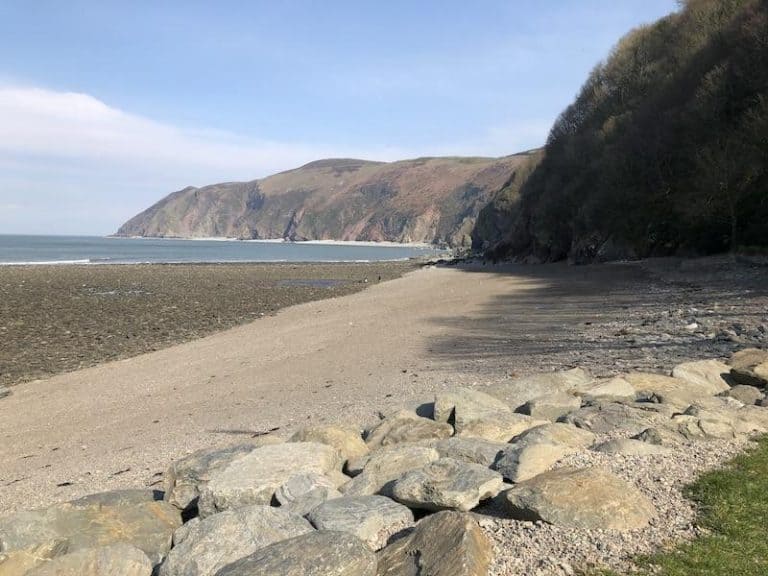
Eastern Beach stretches out beyond the putting green towards the open Channel. It is mainly shingle with rockier patches and some sand and pools at lower tides. On calm days it feels spacious, with long views across the water and back to Hollerday and Summerhouse hills. On rough days, waves can hammer the shingle and the sea can feel lively very quickly.
Western Beach
– close to the harbour and village
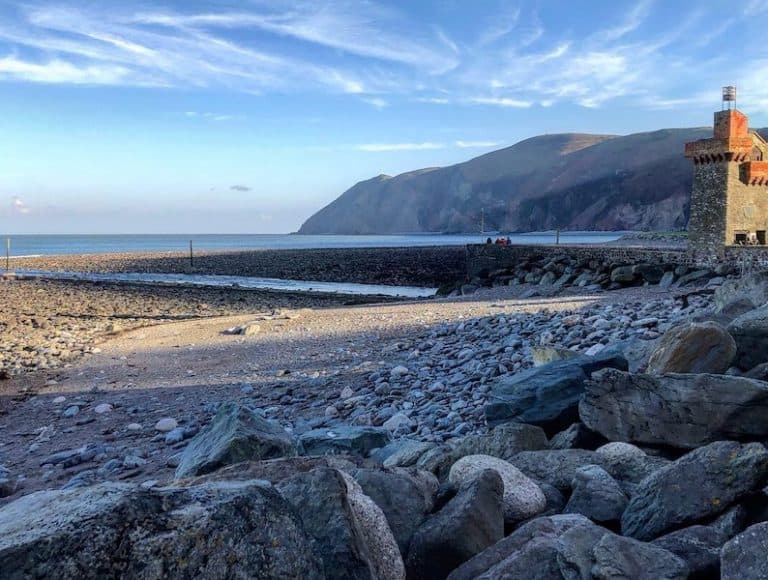
Western Beach sits around and just beyond the harbour wall. It is smaller and closer to cafés, toilets and shops. The shingle here often feels a touch more sheltered, though it is still open sea. Many people use this side for a quick paddle, rock-pooling or simply standing at the edge to check the temperature.
Overall, Lynmouth feels more like a small harbour village on the edge of wild water than a traditional bucket-and-spade resort.
Can you swim at Lynmouth beach, and is it safe?
You can swim at Lynmouth, but it needs treating as what it is: cold, tidal, unsupervised sea.
There are no lifeguards on either Eastern or Western Beach. The shingle shelves steeply, swell can build quickly and there are rocks, moorings and a river mouth nearby. On a calm summer evening, a careful dip can feel unforgettable. On a rough day, it can feel intimidating even to confident swimmers.
What to expect if you go in
The water is cold, even in high summer; a wetsuit is sensible for longer swims.
The steep shingle means the water can go from ankle-deep to waist-deep in a couple of steps.
Small-looking waves can dump hard on the stones when there is swell.
Underfoot, it is loose pebbles and rock; water shoes make life easier.
Who is Lynmouth sea swimming best for?
Lynmouth suits people who already have some open-water experience and are used to reading conditions. It is not the ideal spot for nervous swimmers, toddlers expecting flat sand, or anyone who only wants to swim between flags. For that, the big sandy beaches elsewhere in North Devon are a better match.
Are there sandy beaches near Lynton & Lynmouth?
There is no large sandy beach in Lynmouth itself, but you are well placed for some of North Devon’s best-known bays. Many visitors stay in Lynton & Lynmouth and pick one or two days to drive out for sand and surf.
Quieter, lesser-known beaches in North Devon
Barricane Beach
– a tiny cove at the Woolacombe end of the bay, with shells underfoot and limited space at high tide; more intimate than the main beach.
Lee Bay & Sandy Cove
– a tucked-away valley between Ilfracombe and Woolacombe with a mix of rock, sand and pools; good for exploring and feeling “away from it all”.
Heddon’s Mouth
– a narrow, stony cove reached on foot down the wooded Heddon Valley; dramatic and atmospheric, better for walking and picnics than full-on swimming.
Instow
– a long, estuary-side beach opposite Appledore; softer sand and village feel, but stronger currents so many people stick to paddling and walking.
Crow Point
– wide, open sands near Braunton on the estuary side, popular with dog walkers; beautiful but exposed, with tides and soft ground to treat with respect.
Allow roughly 35–60 minutes’ drive depending on beach, traffic and time of year.
Practical tips for visiting Lynmouth’s beaches
Frequently Asked Questions
Is it safe to swim at Lynmouth?
You can swim at Lynmouth, but it is wild, unsupervised sea with a steep shingle bank and changing conditions. Confident open-water swimmers sometimes go in on calm days; many visitors stick to paddling in the shallows or swim at lifeguarded sandy beaches elsewhere in North Devon.
Are there lifeguards on Lynmouth beach?
No. There are no lifeguards on Lynmouth’s Eastern or Western beaches. If you go in the water, you are fully responsible for your own safety and for anyone with you.
Is there a sandy beach in Lynmouth?
Lynmouth’s beaches are mostly shingle and rock, with some sand and pools appearing at low tide. If you want a wide, sandy bay for the day, you will need to drive to one of the larger North Devon beaches such as Combe Martin, Woolacombe, Saunton Sands, Croyde or Westward Ho!.
How far are the nearest sandy beaches from Lynton & Lynmouth?
Most of the main sandy beaches are within roughly 35–60 minutes’ drive, depending on where you go and the time of year. The North Devon beaches guide on the Visit Lynton & Lynmouth website sets out options, drive times and what each beach is best for.
Is Lynmouth good for surfing or bodyboarding?
Lynmouth is not a mainstream surf or bodyboard beach for visitors. The steep shingle, rocks and lack of lifeguards make it a poor choice for that. For surfing and bodyboarding, head to the main sandy bays listed in the North Devon beaches guide and treat Lynton & Lynmouth as your base.
Can dogs go on Lynmouth’s beaches?
Dogs are often seen around Lynmouth’s shoreline, especially outside peak season, but any local restrictions or guidance will be signposted on the seafront. Always follow on-site notices and keep dogs under control around other beach users and wildlife.
To learn more about North Devon’s Beaches visit the North Devon Council website for more information.
Plan & Book Your Visit to Lynton & Lynmouth
Use these pages to shape the perfect trip or stay: