

Lorem ipsum dolor sit amet, consectetur adipiscing elit. Ut elit tellus, luctus nec ullamcorper mattis, pulvinar dapibus leo.
First Time in Lynton & Lynmouth?
A Calm, Honest Guide to Getting It Right
If this is your first time in Lynton & Lynmouth, you don’t need to over-plan — but a little context goes a long way.
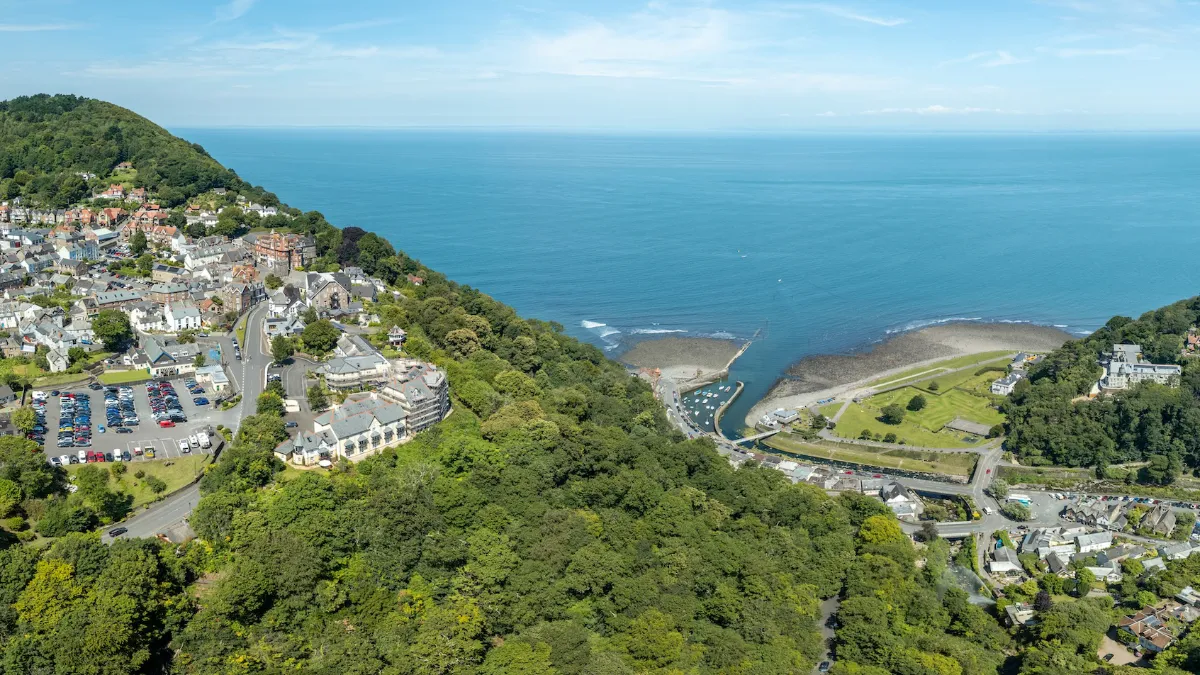
These are small villages, set high above the Bristol Channel, shaped by steep valleys, fast-changing weather, and a landscape that rewards curiosity more than ticking boxes. People often underestimate them — either by trying to do everything in one go, or by arriving without understanding how the two villages work together.
This guide is here to help you make the right choices first time: when to visit, where to base yourself, what not to miss, and what to let go of. Use it as a reference, dip in where you need to, and take the rest at your own pace.
Quick start: the essentials at a glance
Best time to visit
Late spring and early summer for balance; autumn for quieter drama; winter for raw, pared-back Exmoor.
Two villages, one visit
Lynton sits high on the cliffs; Lynmouth is by the harbour — they feel different, and that’s part of the appeal.
Getting around
Distances are short, effort is not. Footwear matters.
What to prioritise
Landscape first, villages second, then explore further afield.
What to expect
Independent shops and eateries, seasonal opening patterns, big skies, steep paths, and space to breathe.
Jump to what matters to you
Use the links below to go straight to the sections most useful for your trip:
When to visit: a seasonal reality check
If this is your first time in Lynton & Lynmouth, when you visit matters almost as much as what you do. These villages change character with the seasons — not just in weather, but in pace, light, and what’s open.
There’s no “wrong” time to come. But there are times that suit different expectations better than others.
Late Spring to Early Summer
The best all-round choice
(May – June)
The days are long, the light is clear, and the landscape is fully awake. Walks are at their best, the Valley of Rocks feels expansive rather than exposed, and most attractions, cafés, and shops are open without the pressure of peak summer crowds.
It’s the easiest season to understand the place — and often the one people wish they’d chosen first.
High Summer
Busy, lively, and full of contrast
(July - August)
Mid-summer brings energy. Families, walkers, day-trippers, and holidaymakers all converge, and the villages feel animated and social.
That said, this is also when planning matters most. Popular places to eat book up quickly, parking fills early, and some quieter corners lose their stillness. Early mornings and evenings become the best times to explore.
Late Summer to Early Autumn
Calmer, deeper, more reflective
(September - October)
This is a favourite season for repeat visitors — and a strong choice for first-timers who prefer space over buzz.
The sea is often warmer than expected, the light softens, and the moors feel more expansive. Walks are less pressured, sunsets linger, and the villages settle into a gentler rhythm.
Some seasonal businesses begin to scale back, but what remains is often at its best.
Winter
Wild, pared back, and quietly powerful
(November - February)
Winter in Lynton & Lynmouth is not a glossy experience — and that’s the point.
Many attractions close, opening hours shorten, and the weather can be challenging. But the cliffs feel bigger, the sea more present, and the villages more intimate. On clear days, the drama is unmatched. On wild days, it’s best experienced from a warm café window.
January in particular is very quiet. For some, it’s too empty. For others, it’s exactly right.
In short: If you want ease and clarity on your first visit, choose late spring or early summer. If you want atmosphere, come in peak summer. If you want depth and space, aim for autumn. If you want Exmoor stripped back to its bones, winter won’t disappoint — but it asks more of you.
What to decide before your first visit
Lynton & Lynmouth are easy to enjoy, but they reward a little thought upfront. Before you arrive, a few simple decisions will shape how relaxed — or rushed — your visit feels. This isn’t about planning every hour. It’s about setting yourself up to enjoy the place as it is.
How long to stay?
For a first visit, two to three nights is the sweet spot. One night barely scratches the surface, especially once you factor in walking time and weather. Two nights allows you to explore both villages without pressure. Three nights gives you breathing space — and often convinces people to come back.
If you’re only here for a day, focus on one village and one walk, not everything.
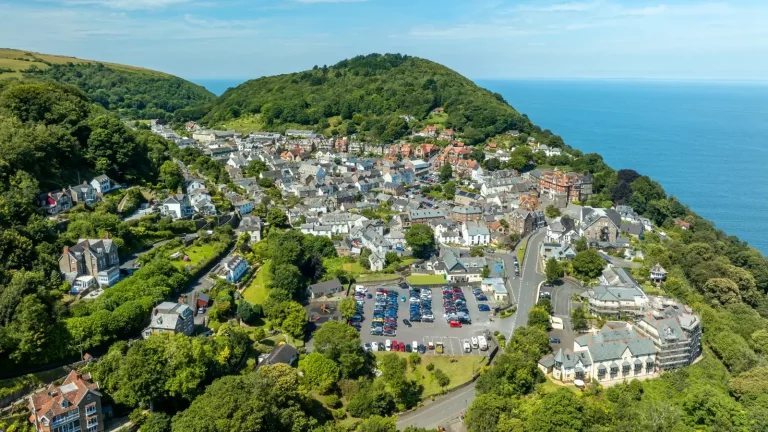
Lynton
This picturesque village sits high above the sea. It’s quieter, greener, and closer to open moorland and cliff walks.
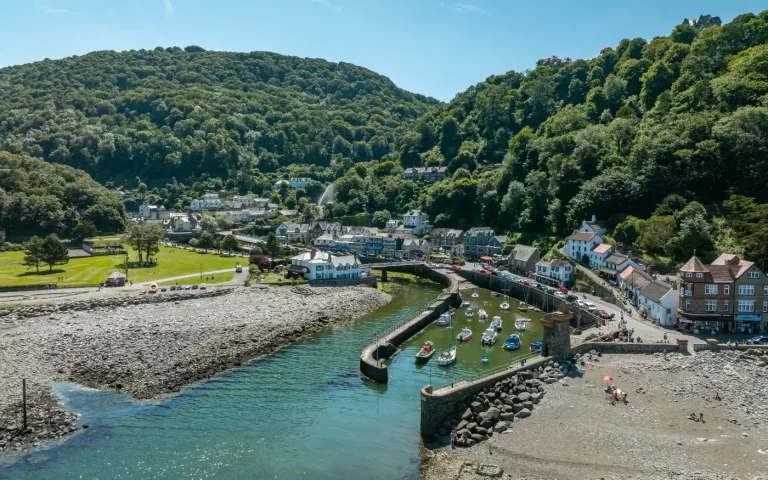
Lynmouth
Positioned beautifully by the harbour. It feels more immediate and coastal, with the river, the sea, and the sound of water shaping the experience.
Many first-time visitors enjoy splitting their time across both — or staying in one and exploring the other properly during the day. There’s no wrong answer, but understanding the difference helps set expectations.
Car or no car?
You can visit Lynton & Lynmouth without a car, and many people do — especially if walking, using public transport, or staying centrally.
That said, having a car opens up:
quieter headlands
inland Exmoor villages
places like Countisbury, Malmsmead, and Woody Bay
If you’re arriving without a car, plan to slow down rather than squeeze everything in.
What to prioritise (and what to let go of)
First-timers often try to do:
every walk
every viewpoint
every attraction
That’s a mistake.
A better approach:
Choose one or two standout walks
Spend proper time in both villages
Leave space for weather, rest, and discovery
Distances are short. Elevation and terrain are not. Footwear matters more than mileage.
Eating plans: light planning beats spontaneity
Out of season, you can usually decide as you go. In peak summer and busy weekends, a little planning avoids frustration.
You don’t need to book every meal, but it’s wise to:
identify a couple of places you’d like to try
make one or two reservations if visiting during the busy season (June to September)
This is about removing stress, not locking yourself in.
In short: Decide how long you have, where you’ll base yourself, how you’ll get around, and what really matters to you. Once those are clear, Lynton & Lynmouth take care of the rest.
Lynton vs Lynmouth: how the two villages work
One of the most important things to understand on your first visit is that Lynton and Lynmouth are not two versions of the same place. They are closely linked, physically and historically, but they feel different — and that contrast is part of what makes a visit here distinctive.
Lynton sits high on the cliffs, around 500 feet above sea level. Lynmouth lies below, at the meeting point of river and sea. The distance between them is short, but the change in elevation shapes everything — views, walking routes, pace, and atmosphere.
You move between them by the Cliff Railway (seasonal, historic, and part of the experience) | the Zig Zag Path, a steep walking route with stunning views | a short Taxi or Bus ride. Most visitors use a mix of all three.
Lynton
Elevated, open, and closer to the moor
Lynton feels greener and more expansive. It’s closer to open Exmoor, cliff-top walks, and wide views across the Bristol Channel. The village itself is compact but calm, with a sense of space created by height and light.
Many people start their visit here, especially if they enjoy walking, slower mornings, and being closer to the landscape than the shoreline.
Lynmouth
Immediate, coastal, and shaped by water
Lynmouth feels closer to the elements. The harbour, the river, and the sound of the sea are never far away. It’s where paths converge, where boats come and go, and where the villages’ history is most visible.
It often feels busier during the day, especially in summer, but quieter again in the early morning and evening — when the harbour really comes into its own.
Which should you explore first?
There’s no fixed rule, whichever suits the moment! Either way, try not to rush between the two. Treat them as distinct chapters of the same visit, not a single place to be ticked off quickly.
In short: Lynton and Lynmouth are best understood together — but appreciated separately. Give each village its own time and rhythm, and the relationship between them becomes one of the highlights of a first visit.
First-time Must-Dos in Lynton & Lynmouth
Have you really visited Lynton & Lynmouth if you haven’t done at least a few of these?
These aren’t about ticking boxes. They’re about experiencing the places and viewpoints that help everything else make sense — the geography, the scale, and the relationship between land, sea, and village life.
You don’t need to do them all. Pick what fits your time, energy, and the weather.
Walk the Valley of Rocks
An easy-to-medium walk with wide views, dramatic geology, and wild goats roaming freely. Approaching from Lynton via the South West Coast Path adds extra drama.
Spend proper time in both villages
Lynton for its elevated views and open feel; Lynmouth for the harbour, river, and sense of scale. Don’t just pass through — slow down in each.
Ride the Cliff Railway (when it’s running)
More than transport, this water-powered railway is part of the story. Use it at least once, ideally combined with walking.
Walk to Watersmeet
Watersmeet is the classic river walk through wooded gorge. If that’s too long or uneven, Glen Lyn Gorge offers a shorter, steeper alternative with waterfalls and height.
Walk out to Lynmouth’s eastern beach
A simple but revealing moment — the village framed by cliffs, river, and sea makes its geography instantly clear.
Visit the Lynmouth Flood Memorial
A short visit that adds vital context about the 1952 flood that shaped modern Lynmouth.
Take a photo with the Rhenish Tower
A small but iconic landmark that quietly anchors the village’s historic character.
Watch the sunset in the Valley of Rocks
As the light drops, the cliffs soften and the scale of the place becomes clear — a moment most first-time visitors remember.
In short: These are the experiences that help first-time visitors connect the dots. Once you’ve done a few of them, everything else — walks, meals, viewpoints, quieter corners — falls into place naturally.
Experiences that define Lynton & Lynmouth
Beyond the landmarks and walks, Lynton & Lynmouth are defined by moments — often unplanned — when the landscape, light, and weather align.
These aren’t things to tick off. They’re experiences that tend to stay with people long after their first visit.
Feel the scale of the coast
This is not a gentle stretch of shoreline. Cliffs rise sharply, paths cling to edges, and views open suddenly. Whether you’re on the South West Coast Path or simply looking out from a quiet bench, the sense of exposure is part of the appeal.
Give yourself time to stop and look — not just walk through.
Watch the light change
Light behaves differently here. Mist rolls in from the sea, clouds lift off the moor, and the colour of the cliffs shifts throughout the day.
Sunset is the obvious highlight, but even brief breaks in cloud can transform the mood in minutes. First-time visitors often remember the light as much as the places themselves.
Hear the landscape
Away from the harbour, sound drops away quickly. Wind, water, birds, and the sea take over.
On quieter paths — especially early morning or out of season — the stillness can be striking. It’s one of the simplest, most overlooked parts of the experience.
Encounter Exmoor wildlife
Feral goats in the Valley of Rocks are hard to miss, but quieter encounters often leave a deeper impression: ponies on the moor, birds riding the updrafts, seals glimpsed offshore on calm days.
These moments aren’t guaranteed — and that’s part of what makes them memorable.
Let the weather be part of the visit
Exmoor doesn’t always play to plan. Wind, rain, and mist are common, even in summer.
Rather than fighting it, work with it. A misty walk, a blustery viewpoint, or a sudden downpour followed by clear air often feels more authentic than perfect blue skies.
In short: Lynton & Lynmouth reward attention more than ambition. Slow down, notice what’s happening around you, and let the place reveal itself — that’s when it tends to make sense.
Eating & drinking: what to look for locally
Food and drink in Lynton & Lynmouth aren’t about trends or big-city dining scenes. They’re shaped by landscape, seasonality, and what can realistically be produced, sourced, and served well in a small coastal community.
For first-time visitors, knowing what to look for matters more than knowing specific names.

Devon cream teas are part of the ritual
A cream tea isn’t just a box to tick — it’s a pause.
Whether taken mid-walk or as an afternoon stop, it’s one of the simplest ways to slow down and settle into the pace of the place. Don’t overthink it. Fresh scones, proper jam, and local clotted cream are what matter.
Timing matters as much as taste
Eating patterns here follow the day — and the season, and a little awareness goes a long way in avoiding frustration.
In short: Eat locally, seasonally, and without hurry. The best food experiences here tend to be the ones that fit naturally into the day rather than dominating it.
Good to know before you go
A few practical details can make a big difference to how relaxed your visit feels — especially if this is your first time in Lynton & Lynmouth.
Shops & Essentials
You’ll find:
Independent shops, makers, and galleries in both villages
Two small supermarket for basics in Lynton
A Lynton chemist (with limited opening hours)
This isn’t a place for big retail runs, but it’s well set up for short stays.
Cash, Cards & ATMs
Most places accept cards, but having a small amount of cash can still be useful. ATMs are available, though fewer than in larger towns.
Amex is less widely accepted than other cards.
Fuel & EV Charging
There is a local fuel station in Barbrook, and EV charging points are available in Upper Lyndale Car Park in Lynmouth. If you’re travelling further across Exmoor, it’s sensible not to run too low.
Getting around locally
Distances are short, but hills are steep
Walking routes vary from easy paths to rugged terrain
Local taxi services are available and useful, especially between villages or in poor weather
Comfortable footwear matters more than anything else.
Mobile signal & connectivity
Mobile reception can be patchy, especially away from the villages and in wooded valleys. EE-related services are reported to more accessible. Consider this part of the experience rather than a problem to solve.
Accessibility
Some areas are naturally challenging due to terrain, gradients, and historic layout. That said, many viewpoints, paths, and village areas are accessible with planning. It’s worth checking details in advance if this matters to you.
In short:Lynton & Lynmouth are well-equipped, but they’re not built for rushing. A little awareness, good footwear, and flexible expectations go a long way.
Frequently Asked Questions
Is Lynton & Lynmouth worth visiting?
Yes — especially if you enjoy dramatic landscapes, walking, and small villages with strong character. The appeal here is scale, scenery, and atmosphere rather than big attractions or nightlife.
How long should I spend in Lynton & Lynmouth?
For a first visit, two to three nights is ideal.
One night is very rushed, while three nights allows time to explore both villages, do at least one proper walk, and adjust plans around the weather.
What’s the difference between Lynton and Lynmouth?
Lynton sits high on the cliffs and feels greener and more open, while Lynmouth is by the harbour where the river meets the sea. They’re closely linked but feel distinct, and most visitors explore both.
Can I visit Lynton & Lynmouth without a car?
Yes. Many visitors arrive by public transport and stay centrally. Walking, local buses, taxis, and the Cliff Railway (when running) make it possible — just expect to slow down and focus on the villages rather than travelling widely across Exmoor.
It should be considered that Lynton & Lynmouth are very remote with limited public transport options.
When is the best time to visit Lynton & Lynmouth?
Late spring and early summer offer the best balance of weather, daylight, and opening hours. Autumn is quieter and atmospheric. Summer is lively but busy. Winter is raw, dramatic, and much quieter, with reduced opening hours.
Is Lynton & Lynmouth suitable if I don’t want long walks?
Yes — but it helps to be selective. There are short strolls, viewpoints, and gentle paths, especially around the villages and Valley of Rocks. That said, hills and uneven ground are part of the landscape.
Do I need to book restaurants in advance?
In peak summer and busy weekends, booking ahead is essential, especially in the evenings. Outside peak season, spontaneity is usually easier, though opening days and hours can vary.
Is Lynton & Lynmouth good in winter?
If you’re looking for quiet, dramatic scenery and don’t mind variable weather, winter can be very rewarding. Many attractions and some businesses close or reduce hours, so it’s best suited to visitors who enjoy walking, views, and slower days.
Plan & Book Your Visit to Lynton & Lynmouth
Use these pages to shape the perfect trip or stay:
To learn more about Exmoor National Park visit the Website for more information.