

Exmoor Ponies
Exmoor Ponies | History, Wildlife & Where to See Them on Exmoor
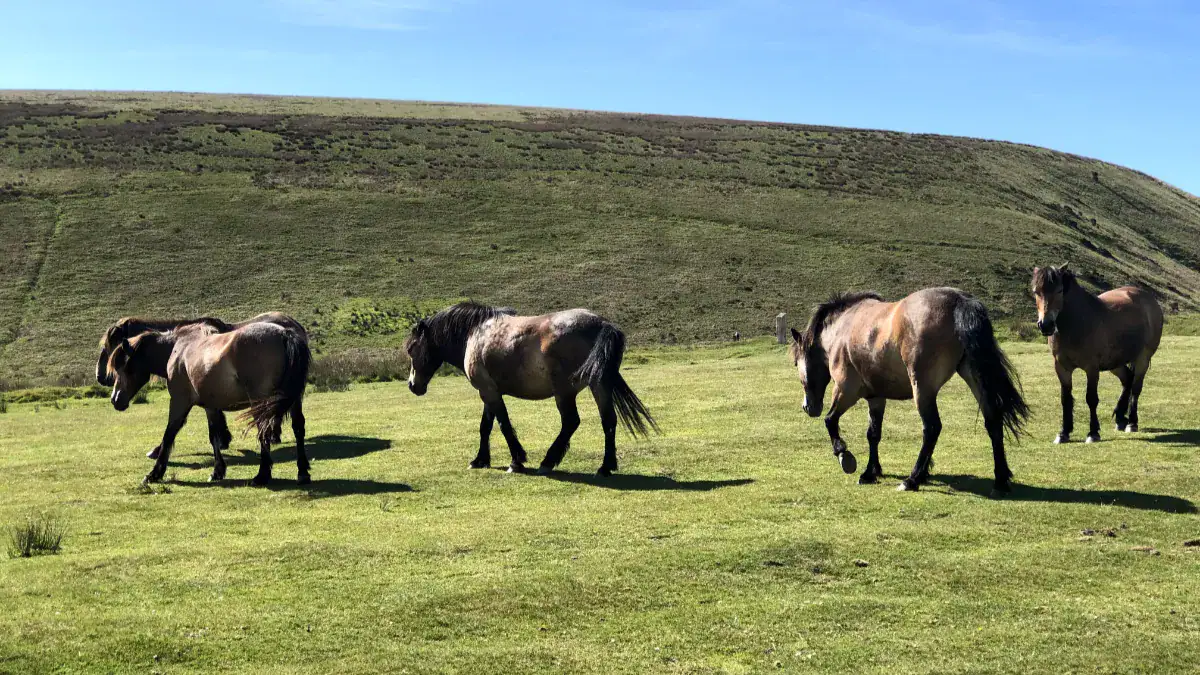
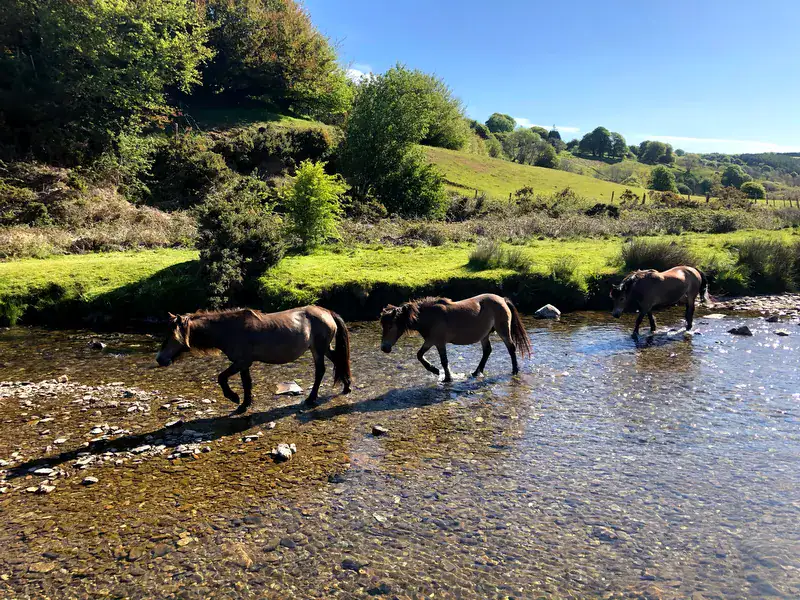
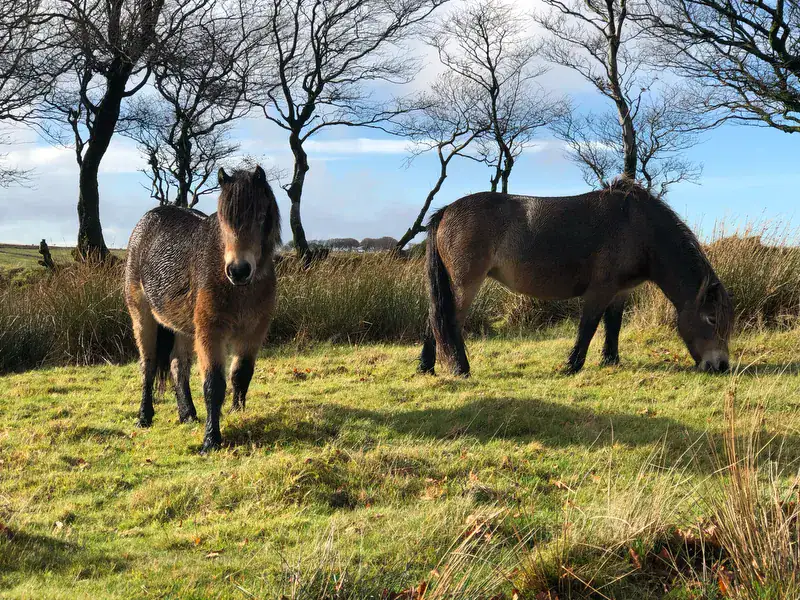
Exmoor ponies are one of the defining sights of Exmoor National Park. Stocky, weather-hardened and perfectly adapted to life on the open moor, they are among Britain’s oldest native pony breeds and an essential part of the landscape you see today.
You may spot them while driving across the moor, walking high ridges, or standing quietly as mist drifts through the valleys. Despite how familiar they can appear, Exmoor ponies are often misunderstood. This page explains who they are, why they matter, where you might see them — and how to treat them with the respect they deserve.
The History of Exmoor Ponies
Exmoor ponies are considered one of the closest living relatives of Europe’s prehistoric wild horses. Archaeological and genetic evidence suggests their ancestors were present in Britain thousands of years ago, surviving extreme climate shifts and harsh conditions.
Unlike many modern horse breeds, Exmoor ponies were never selectively bred for speed or elegance. Instead, they evolved to survive. Their dense coats, strong legs and efficient grazing habits reflect a long relationship with the land.
Their appearance today is not a revival or reconstruction — it is continuity.
Are Exmoor Ponies Wild?
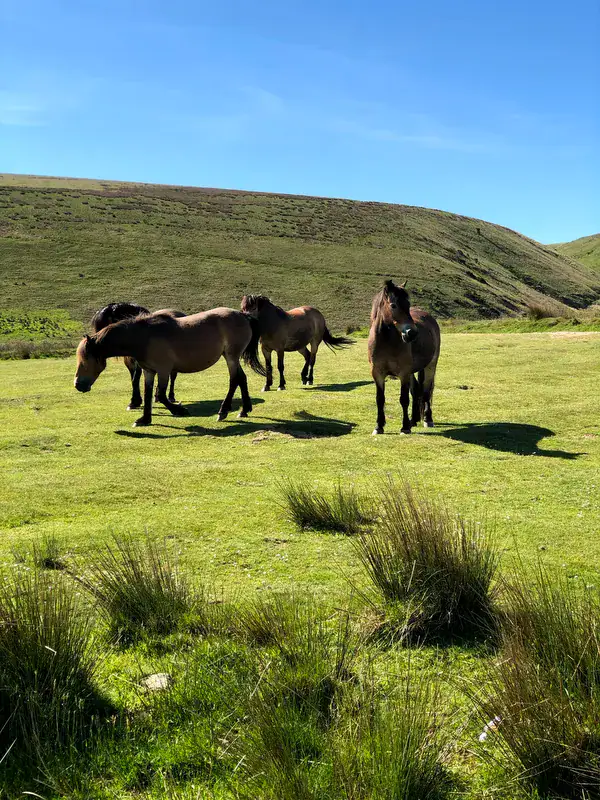
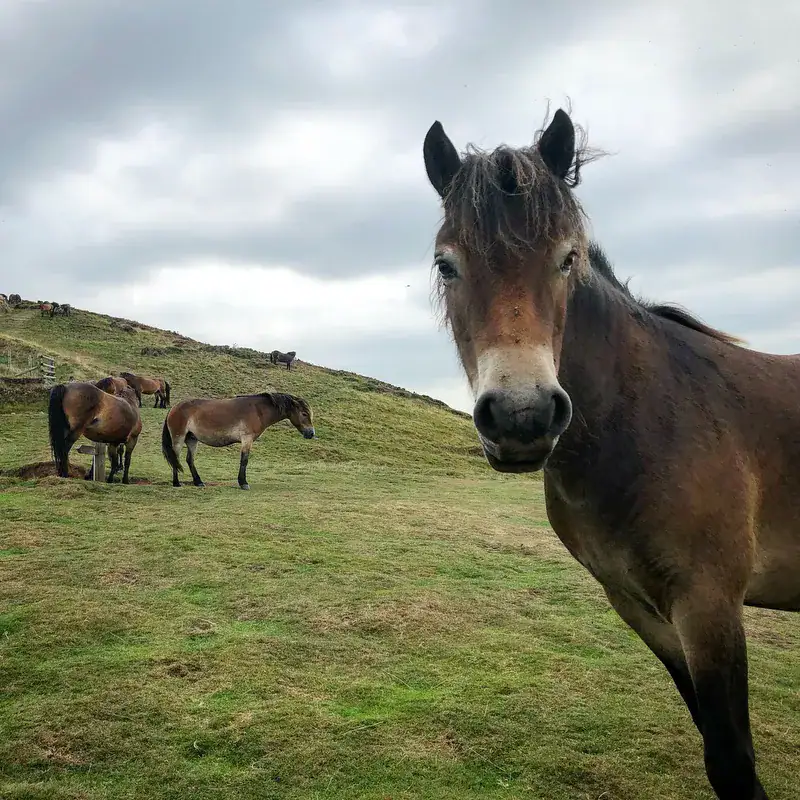
Exmoor ponies are semi-feral.
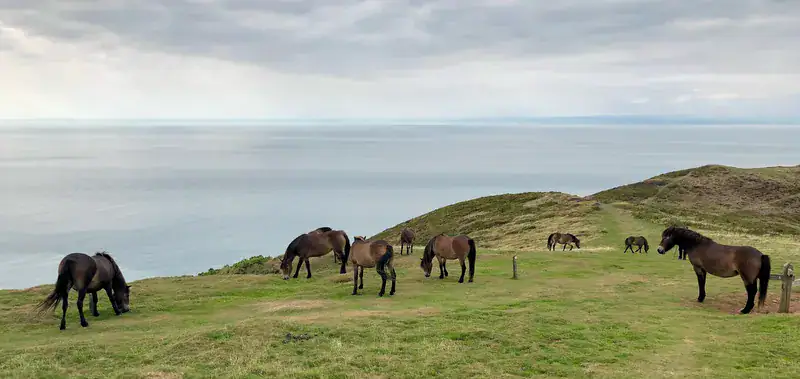
They roam freely on the open moor all year round, but they are owned, monitored and carefully managed as part of conservation and breeding programmes. They are not pets, and they are not working animals in the way farm livestock are.
Their freedom is real, and so is the responsibility that comes with it.
Why Exmoor Ponies Matter to the Moor
Exmoor ponies play an active role in shaping the landscape.
Without them, the moor would gradually change — becoming rougher, less diverse, and less open. Their presence helps maintain the balance that defines Exmoor’s character.
Where to See Exmoor Ponies
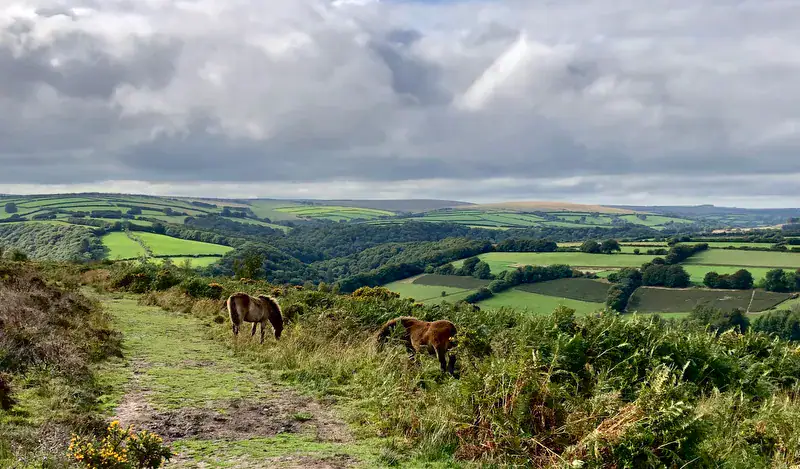
Exmoor ponies live across large areas of open moorland, particularly on higher ground and wide commons. You may see them:
There are no guaranteed locations or times. Sightings are unpredictable, and that is part of what makes them special.
For visitors who want to learn more and see ponies up close in a responsible, educational setting, the Exmoor Pony Centre near Dulverton plays a key role in conservation, monitoring and public understanding
How to Behave Around Exmoor Ponies
This is essential. Exmoor ponies are calm animals, but they are not tame. Poor behaviour from visitors can cause stress, injury, or long-term harm. Please follow these principles:
If a pony moves away, you are too close.
Foals and Seasonal Awareness
Foals are usually born in late spring and early summer. It is common to see a foal resting alone while the mare grazes nearby.
This is normal behaviour.
Do not intervene unless a foal is clearly injured or distressed. Never attempt to touch or move a foal, and avoid drawing attention to its location.
Horse Riding and Exmoor Ponies
Seeing Exmoor ponies roaming freely on the moor is very different from riding a pony.
Free-roaming Exmoor ponies are not riding animals and should never be approached, handled or interacted with. However, in carefully controlled circumstances, riding Exmoor ponies does take place.
At the Exmoor Pony Centre, children may be able to ride Exmoor ponies under professional supervision, as part of structured, welfare-led activities. These sessions are educational rather than recreational and only involve ponies selected and managed specifically for this purpose.
The distinction matters:
Horse riding elsewhere on Exmoor takes place with trained horses at licensed riding centres and does not involve wild or semi-feral ponies.
Frequently Asked Questions
Are Exmoor ponies wild?
Exmoor ponies are semi-feral. They live freely on the moor but are owned and carefully managed for conservation.
Can you touch or feed Exmoor ponies?
No. Touching or feeding Exmoor ponies can harm their health and alter natural behaviour.
How close can I get to an Exmoor pony?
You should keep a very respectful distance. If a pony moves away, you are too close.
What should I do if I see a foal on its own?
Leave it alone. This is normal behaviour. Do not intervene unless the foal is clearly injured.
Are Exmoor ponies dangerous?
They are generally calm but should be treated as wild animals. Sudden movements or close approaches can cause stress.
When is the best time to see Exmoor ponies?
They can be seen all year-round, but sightings are never guaranteed. Late spring and summer are when foals may be visible.
Can children ride Exmoor ponies?
Yes, but only under professional supervision. At the Exmoor Pony Centre, children may be able to ride Exmoor ponies as part of structured, welfare-led activities.
Can adults ride Exmoor ponies?
Generally no. Small adults maybe. You can get more advice at the Exmoor Pony Centre.
Where can I learn more about Exmoor ponies?
The Exmoor Pony Centre near Dulverton provides education, conservation insight and responsible opportunities to see ponies up close.
To learn more about Exmoor Ponies visit the Exmoor Pony Centre for more information and up-close experiences.
Plan & Book Your Visit to Lynton & Lynmouth
Use these pages to shape the perfect trip or stay: